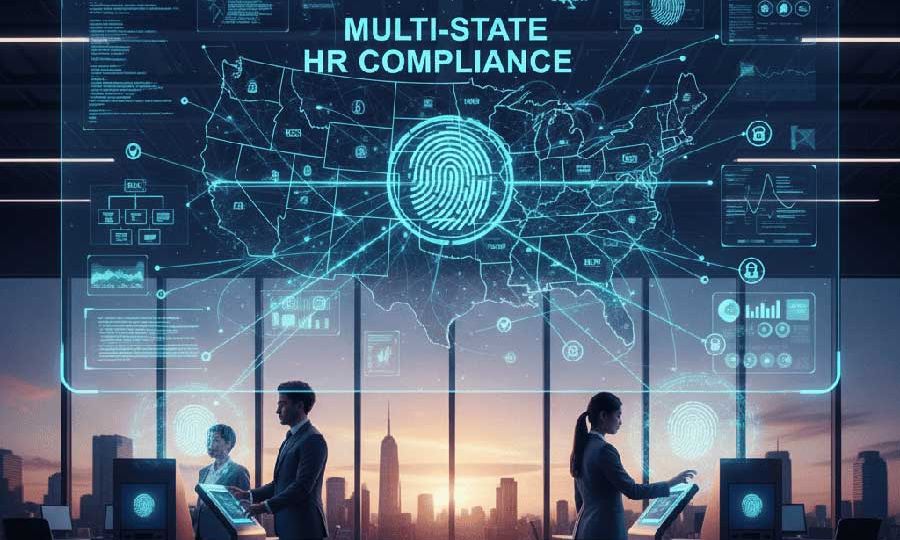
As organizations expand across state lines, HR teams face growing complexity in compliance, identity verification, onboarding, and workforce management. Fingerprinting requirements vary widely between states, especially in regulated industries such as healthcare, childcare, transportation, and financial services.
Biometric enrollment systems help HR departments standardize identity verification across all locations, reduce administrative burden, and maintain compliance with diverse state regulations. Below is how biometrics support multi-state workforce operations.
Why Multi-State Hiring Creates Compliance Challenges
A distributed workforce brings challenges such as:
- Different state-level fingerprinting requirements
- Varying ORI numbers and submission workflows
- Remote and hybrid employees spread across geographic regions
- High-volume hiring for seasonal or contract roles
- Ensuring consistent identity verification across all sites
Manual processes become error-prone and unsustainable at scale.
Standardizing Identity Verification with Biometrics
Fingerprint-based screening solves HR challenges by establishing a single, objective identity verification standard across states.
Benefits include:
- Reliable identity confirmation
- Reduced fraud during remote hiring
- Consistent background check processes across all locations
- Lower rejections from state or federal agencies
- Streamlined HR documentation and audit readiness
Mobile Fingerprinting for Remote Employees
Mobile kits allow organizations to:
- Fingerprint employees anywhere in the U.S.
- Conduct onboarding at remote sites or pop-up events
- Reduce travel time and scheduling delays
- Improve time-to-hire in compliance-heavy industries
IB Systems provides mobile enrollment kits with FBI-certified scanners and compliant software for on-the-go use.
Integration with HR Platforms
Modern HR ecosystems rely on tools such as:
- Applicant Tracking Systems (ATS)
- Human Resource Information Systems (HRIS)
- Onboarding software
- Contractor management platforms
Biometric enrollment software from IB Systems integrates directly with these systems via secure APIs, reducing duplicate data entry and administrative work.
Ensuring State-by-State Compliance
Each state may have unique requirements for:
- Fingerprinting format (EFT/EFTS)
- Transmission endpoints
- Quality standards
- Agency-specific workflows
IB Systems helps organizations build a unified fingerprinting process that adapts to individual state policies.
Improving Workforce Security
In industries with high risk exposure, such as healthcare or education, fingerprint-based identity verification reduces:
- Insider threats
- Credential misuse
- Fraudulent employment applications
Biometrics help HR teams make more confident hiring decisions while protecting facilities and clients.
Conclusion
A multi-state workforce requires consistency, accuracy, and regulatory alignment. Biometric enrollment creates a unified, secure, and streamlined onboarding process no matter where employees reside. IB Systems equips HR teams with the tools needed to maintain compliance at scale.