
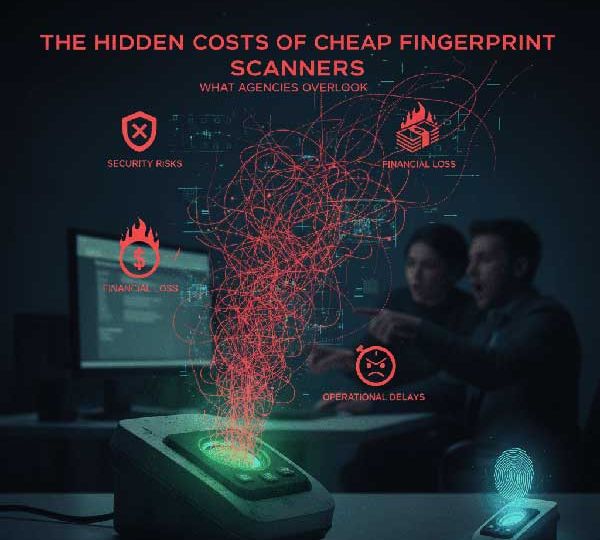
Many organizations attempt to reduce upfront costs by purchasing low-cost, non-certified fingerprint scanners. While these devices may appear budget-friendly, they often create significant long-term expenses, compliance challenges, and workflow disruptions. Understanding the hidden costs can help decision-makers choose hardware that delivers reliability and value.
Why Cheap Scanners Fail in Professional Environments
1. High Image Rejection Rates
Low-cost scanners often fail to meet:
- FBI Appendix F standards
- NIST IQS fingerprint requirements
This results in:
- Frequent resubmissions
- Applicant frustration
- Delayed onboarding
2. Inaccurate or Low-Quality Images
Cheap devices struggle with:
- Distorted ridge detail
- Poor dynamic range
- Difficulty capturing dry or worn fingerprints
This compromises identity matching and AFIS compatibility.
3. Poor Durability
Budget devices typically use:
- Low-grade sensors
- Fragile housings
- Non-industrial components
This leads to:
- Frequent breakage
- Higher replacement costs
- Increased downtime
4. Limited Software Support
Low-end scanners rarely include:
- Integration APIs
- Compliance tools
- Encryption protections
- Live quality feedback
This forces organizations to rely on third-party tools, creating a patchwork of systems that fail under audit.
5. Security Vulnerabilities
Inadequate firmware or unsecured communication can expose agencies to:
- Data breaches
- Malware risks
- Unauthorized access to biometric data
Cheap scanners often lack secure transmission protocols required by CJIS or HIPAA.
6. Vendor Instability
Budget vendors frequently:
- Discontinue products quickly
- Provide limited or no support
- Fail to maintain compliance updates
When the vendor disappears, organizations lose access to updates required for secure operation.
Total Cost of Ownership (TCO) Comparison
A low-cost scanner may save a few hundred dollars upfront, but organizations lose far more due to:
- High staff labor
- Repeat enrollments
- Delayed approvals
- Applicant dissatisfaction
- Replacement hardware
- Compliance failures
Professional-grade, FBI-certified scanners deliver better accuracy, lower long-term cost, and consistent operational performance.
How IB Systems Helps Avoid These Pitfalls
IB Systems supplies only hardware that:
- Meets FBI Appendix F certification
- Exceeds NIST image quality requirements
- Integrates with secure enrollment software
- Provides consistent, high-quality results
- Offers vendor-backed warranties, support, and firmware updates
Agencies can avoid the hidden costs of low-quality hardware by investing in devices built for professional workflows.
Conclusion
Cheap scanners create expensive problems. Investing in certified, reliable hardware ensures accurate enrollments, compliance readiness, and long-term operational savings. IB Systems helps organizations choose the right equipment so they avoid costly mistakes.